Kids & family
Birla Planetarium Chennai: A Family Visit Planning Guide
Updated
In this guide
- Book around the show you can attend
- Prepare one small piece of curiosity
- Let the rest of the visit follow naturally
- Locate the Chennai science campus precisely
- Separate the show from the rest of the campus
- Prepare for the format as well as the subject
- Questions to carry into the visit
- A flexible family sequence
- Make the learning continue naturally
- Frequently asked questions
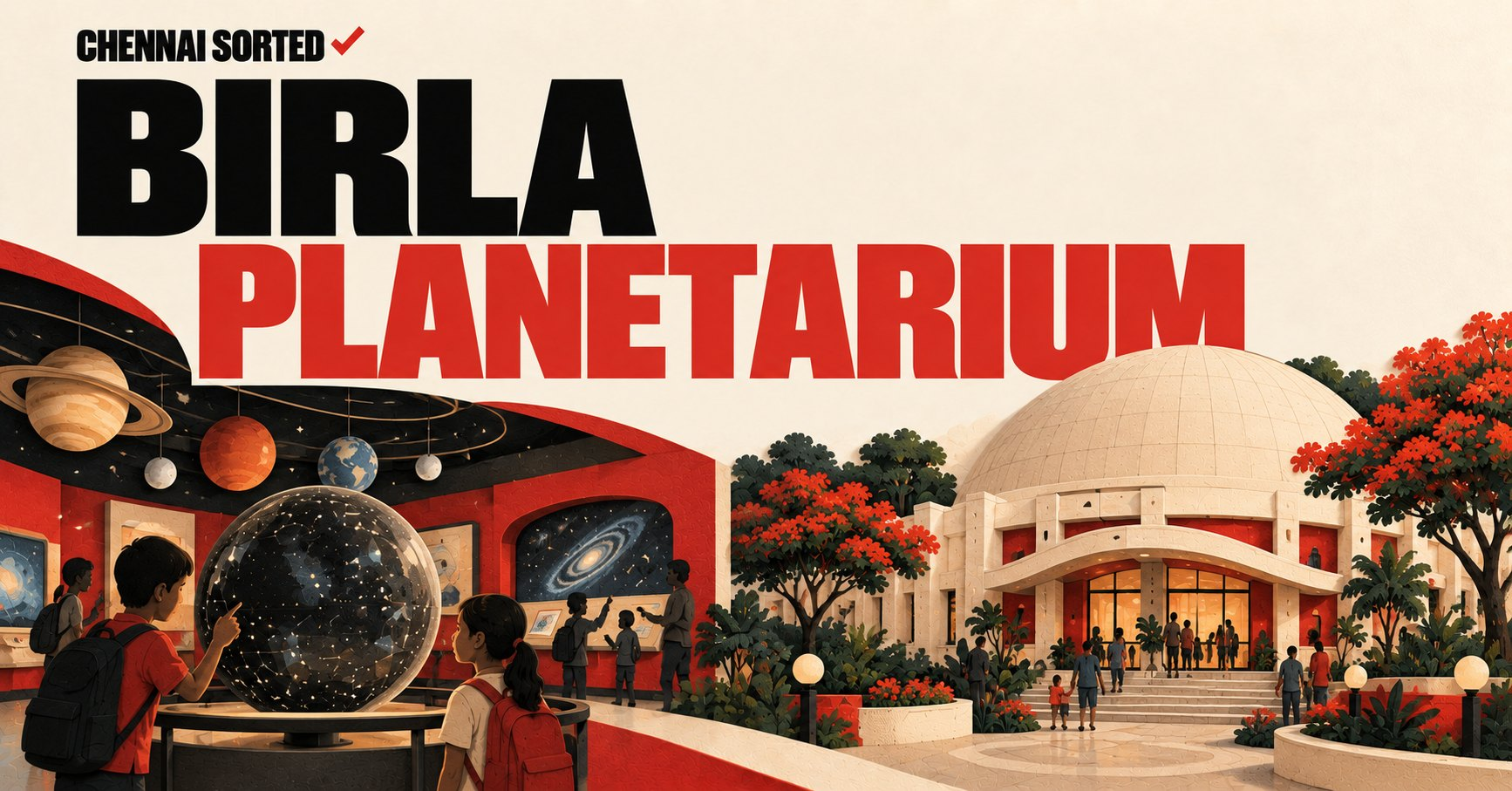
B.M. Birla Planetarium is a useful starting point for a child whose questions keep returning to the Moon, stars or space. It sits within Chennai’s science-centre setting near Kotturpuram. Begin with the official tourism introduction, then confirm the actual show with the venue before travelling.
Book around the show you can attend
The detail that matters most is the language and start time of the chosen presentation. General opening hours do not tell you when a particular show begins. Ask about the programme, duration, admission process and late-entry rules together so you can judge whether it fits your family.
Be careful with search results: several Indian cities have a Birla Planetarium. Chennai’s centre should not inherit Hyderabad’s or Kolkata’s timetable. Use the destination name and address when checking a listing.
Prepare one small piece of curiosity
Before the visit, ask what your child would like to understand. It could be why the Moon changes shape or how constellations got their names. You do not need to teach a lesson in advance. One question gives the child something to listen for without turning the outing into homework.
Think about comfort as well as interest. A darkened auditorium, seated presentation and amplified sound can be a different experience from an interactive exhibit. Ask the venue about access and practical arrangements when those factors affect your choice.
Let the rest of the visit follow naturally
Leave time for the surrounding science exhibits if they are open, but avoid promising access to every gallery. The state centre’s official site is the place to check current notices. We have left prices and a fixed show schedule out of this guide because those details need current confirmation.
If you add another stop, make it a simple one. Kotturpuram’s book and science destinations can suit a shared theme, but two substantial educational visits may be more than a child wants in one day. Choose the planetarium first, and let the second stop remain optional.
Locate the Chennai science campus precisely
The Chennai planetarium is within the Periyar Science and Technology Centre setting on Gandhi Mandapam Road. The Tamilnadu Science and Technology Centre is the relevant state organisation to consult for current notices. Its Chennai information should be kept separate from pages about other centres operated by the same organisation.
Use the exact campus pin when arranging transport and ask about the entrance if someone is being dropped off. A general Kotturpuram search can leave the family at the wrong point on a large road. If you plan to combine the visit with another destination, compare the two actual entrances rather than treating the neighbourhood name as a walking-distance guarantee.
Separate the show from the rest of the campus
A planetarium show is a timed presentation. Galleries and other science-centre activities may have different admission or access arrangements. Ask which ticket or combination covers the visit you intend to make. A general campus opening time does not establish that every show or gallery is available throughout the day.
The most useful booking details are the show title, narration language, start time, duration, admission process and late-entry rule. If a child needs to leave early, ask how that is handled. Those questions help you decide whether the presentation format fits the child, independently of how interested they are in astronomy.
Prepare for the format as well as the subject
A child who loves looking at the Moon may still find a dark auditorium unfamiliar. Explain the basic experience in advance: sitting with other visitors, listening to a presentation and watching images above or around the audience. Keep the explanation factual and calm rather than promising a particular effect or reaction.
For a child who prefers active exhibits, consider whether the show should be the whole visit or only one part. Ask about currently open galleries and choose a modest amount of additional looking. The aim is to maintain curiosity, not to use every available minute simply because the campus has more than one activity.
Questions to carry into the visit
| Interest | A useful question |
|---|---|
| The Moon | What would I like to understand about what I see at night? |
| Stars | How do people recognise patterns in the sky? |
| Planets | What makes one planet different from another? |
| Space travel | What problem would a spacecraft need to solve? |
| Scientific evidence | How do we learn about something far away? |
These are conversation prompts, not a promise that the current show answers every question. Let the programme introduce its own ideas. If the child's question remains unanswered, note it for a book or another reliable source afterwards. A visit can create a better question without supplying a complete explanation immediately.
A flexible family sequence
Arrive with enough margin to complete the actual admission process and find the performance space. Avoid scheduling lunch to finish at the same moment the show begins. If a particular presentation is essential, allow the confirmed timetable to determine the rest of the day.
Afterwards, pause before moving straight into another gallery. Ask what the child noticed, what was confusing and whether they want to keep exploring. Their answer can guide a short additional visit or an early finish. For siblings, allow different reactions rather than expecting everyone to be equally interested in the same subject.
If you want a book connection, Anna Centenary Library is another Kotturpuram destination to examine. Check its section rules and current visitor access separately. Two substantial learning visits can be too much for one day, so keep the library as an option rather than a commitment made before the planetarium visit has happened.
Make the learning continue naturally
Choose one idea to revisit at home through a book, a drawing or a conversation. If the child enjoyed the scale of space, drawing a scene may be more engaging than memorising numbers. If they liked the process of asking questions, help them find a source that explains one of those questions clearly.
An ordinary evening sky observation can also connect the experience to daily life. Keep it simple and avoid making promises about a particular object being visible without checking the actual date and conditions. The value lies in noticing and asking, not in turning every outing into a formal lesson.
Frequently asked questions
Which Birla Planetarium does this guide cover?
It covers Chennai's B.M. Birla Planetarium in the Periyar Science and Technology Centre setting near Kotturpuram. Do not use another city's show schedule for this visit.
Are campus opening hours the same as show times?
No. Confirm the actual presentation, language, start time and admission arrangement. Galleries and other campus activities may have separate access conditions.
Can I assume every child will enjoy the auditorium format?
No. Consider the child's comfort with darkness, sound and a seated presentation, and ask the venue about practical arrangements that would affect the visit.
What should I pair with the planetarium?
One simple nearby food stop may be enough. If a book visit appeals, compare the Kotturpuram science-and-books plan and keep the second destination optional.