Kids & family
Chennai Rail Museum with Kids: Build a Railway-Focused Day
Updated
In this guide
- Give the visit one question
- Plan for both indoor and outdoor looking
- Keep the journey museum-led
- Find the museum, not a railway station with a similar name
- Three ways to explore the collection
- A suggested visit rhythm
- Plan around weather and energy
- Turn the outing into a small follow-up project
- Frequently asked questions
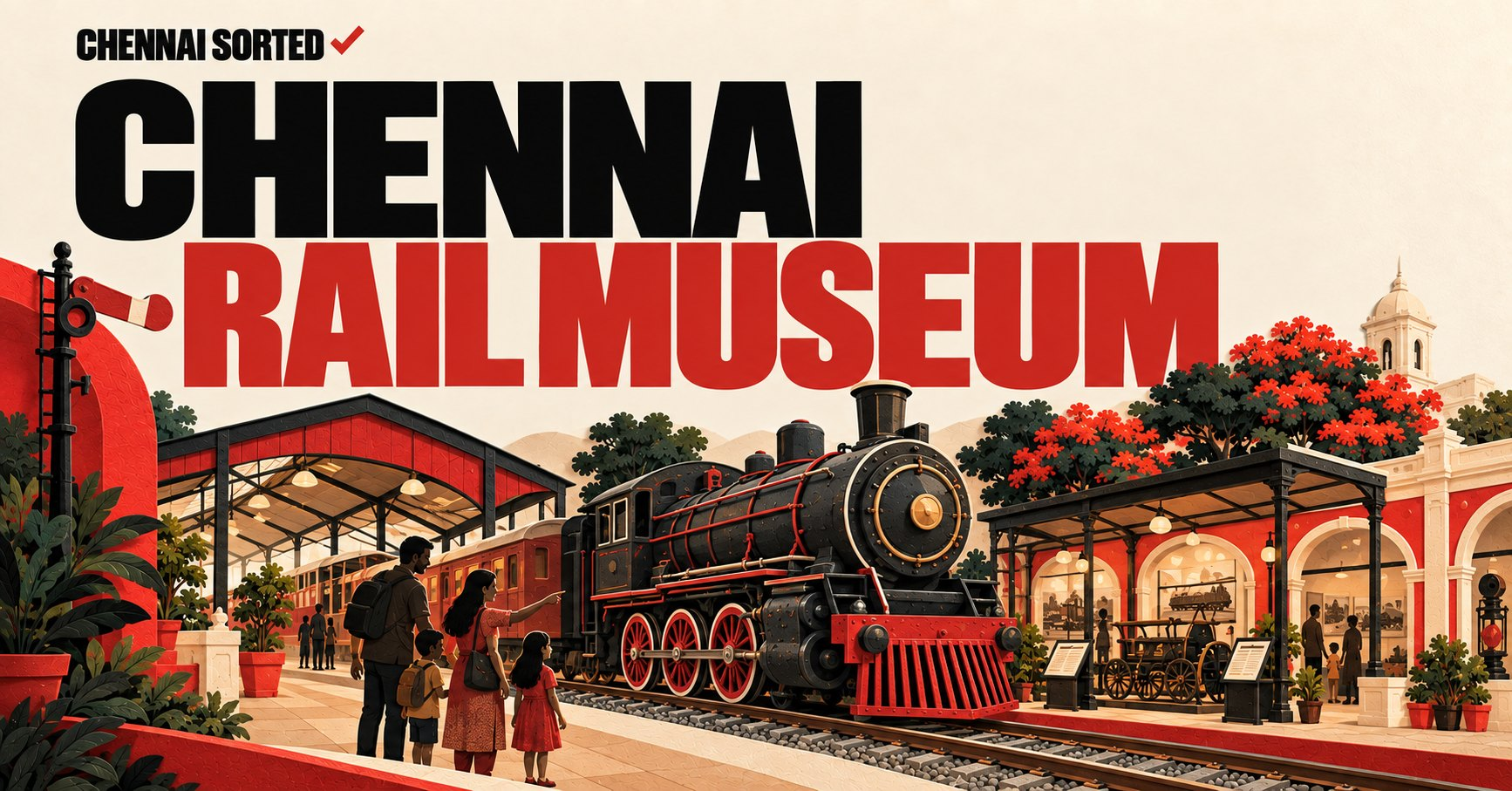
For a child who notices locomotives before landmarks, Chennai Rail Museum offers a clear theme for a day out. Start with the trains, then use the visit to explore how people, goods and ideas move between places. The official tourism overview is a useful introduction to the museum near ICF.
Give the visit one question
Try “How are these trains different?” rather than asking a child to remember every date. Look at wheel sizes, the shape of a locomotive and the arrangement of passenger spaces. A younger visitor can choose a favourite object; an older child can read a label and explain what surprised them.
Let an interest develop. If a model attracts more attention than a full-size exhibit, stay with it. A museum visit is not a checklist, and completing every gallery is not the measure of a good afternoon.
Plan for both indoor and outdoor looking
The museum includes outdoor exhibits as well as galleries. Check the forecast and current opening arrangements, and bring what your family normally needs for time outside. Do not assume every vehicle can be entered or climbed on: use the signs and staff guidance at each exhibit.
Ask separately about any ride, demonstration or special activity. An attraction mentioned in an older review may have a different schedule or be unavailable on your date. We have not treated optional activities as included in general admission.
Keep the journey museum-led
ICF is a specific destination; this is not a quick add-on to an ECR beach day. Choose a food break around the museum journey and your family’s routine. If the visit has already provided enough excitement, leave another attraction for a separate day.
Afterwards, invite each person to draw or describe one thing they saw. You can turn a later train journey into a follow-up by noticing the platform, signals and carriage layout. For other themes, compare our family and learning picks before deciding whether the next outing should involve science, art or transport.
Find the museum, not a railway station with a similar name
Chennai Rail Museum is associated with the ICF setting near the Furnishing Division on New Avadi Road. The Incredible India listing describes railway exhibits, models and galleries. Use the museum's actual map pin when arranging transport; a general search for ICF or Perambur can identify a much wider area.
The tourism page lists Tuesday to Sunday, 10 am to 6 pm, but last entry, holidays and optional activities should be confirmed for your date. Treat those hours as a source to check, not a reason to arrive just before closing and expect a complete visit. A child-led museum outing benefits from enough time to pause.
Three ways to explore the collection
For younger children, begin with visible differences. Find a large wheel and a small one, compare colours and shapes, or count the parts you can see from a permitted viewing position. Keep the activity conversational. A child does not need to understand a locomotive's engineering to enjoy noticing how it differs from a modern train.
For a school-age visitor, choose one object and read its label together. Ask what the object was for, who might have used it and what changed over time. If the answer is not on the label, record the question for later rather than supplying a confident guess. That habit makes the visit a small exercise in using evidence.
For an older child interested in design, compare the needs of passengers, workers and cargo. A carriage has to solve problems of space, movement, visibility and comfort. Look for details that suggest those priorities. The exercise can stay informal: one thoughtful comparison is more rewarding than racing through a list of facts.
A suggested visit rhythm
| Stage | A useful focus |
|---|---|
| Arrival | Confirm open sections and any separate activity timings |
| First look | Let the child choose one exhibit that attracts attention |
| Closer look | Read a label, compare a detail or make a quick sketch |
| Change of pace | Move between available indoor and outdoor areas |
| Ending | Choose one object or question to remember afterwards |
This is an editorial rhythm, not the museum's prescribed route. Follow the actual access signs and staff instructions. Some exhibits may be viewed from outside only, and a full-size vehicle is not automatically a climbing or play structure. Let the available route determine where the family can comfortably go.
Plan around weather and energy
Because the visit includes outdoor viewing, think about sun and rain as part of the plan. Bring the ordinary items your family needs for time outside and check whether the forecast changes how long you want to stay. Indoor galleries can provide a different pace when open, but do not assume every area will be available as a fallback.
For siblings, allow each child to choose one focus. One may prefer the models and another the larger exhibits. Agree on a manageable amount of time rather than trying to make both follow the same interest throughout. A short food or water break can help reset the visit without requiring another destination.
If someone in the group needs step-free access, ask about the route to the specific galleries or exhibits. A museum site can contain different surfaces and levels. A precise question about the planned visit is more useful than a broad yes-or-no question about the whole venue.
Turn the outing into a small follow-up project
At home, let the child draw the object they remember or describe how it worked. You can compare that memory with a photograph taken where photography was permitted. The point is not to test recall; it is to give the child's interest another way to develop.
On a later train journey, notice one related detail such as a carriage layout, a signal or a platform sign. Keep observation within normal passenger areas and follow railway rules. A real journey can make the museum visit feel connected to everyday life without requiring an elaborate lesson.
For a different theme next time, compare school-age learning outings or the Birla Planetarium guide. The rail museum can remain a complete transport-focused day rather than the first stop in an overfilled educational itinerary.
Frequently asked questions
Where is Chennai Rail Museum?
It is in the ICF area near the Furnishing Division on New Avadi Road. Use the museum's exact pin and current visitor information when planning the journey.
Can children enter or climb every train exhibit?
No such assumption should be made. Follow the signs and staff guidance for each exhibit; some vehicles or objects may be for viewing only.
Does general admission include a ride or film?
Check separately. Optional activities can have their own availability, timetable or charges, and an older review does not establish what is operating on your date.
What is a good alternative for a child interested in space?
B.M. Birla Planetarium in Kotturpuram is a different, show-led option. Confirm the presentation, language and ticket arrangement before choosing it over a museum visit.