
-
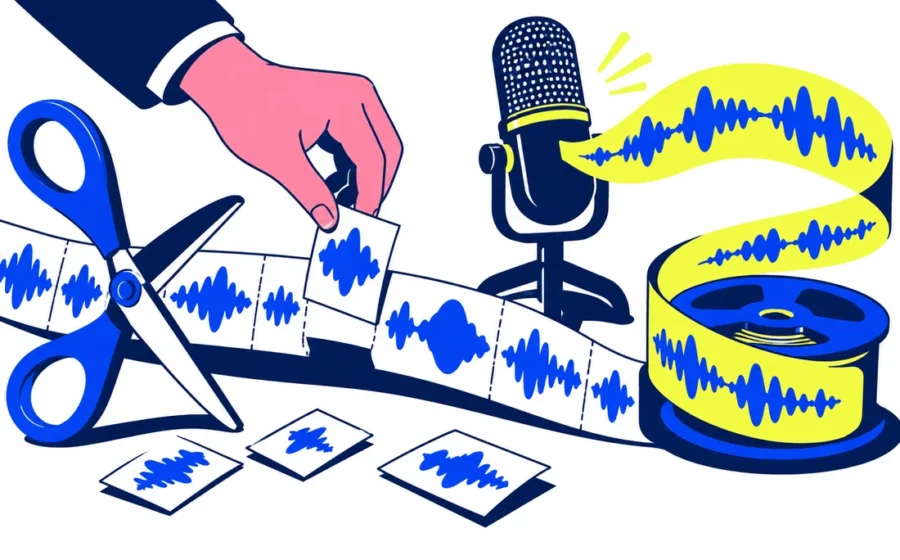
Descript vs ElevenLabs: transcript editing or voice production
Descript and ElevenLabs address overlapping audio work from different starting points.
-

Vector vs keyword search: compare retrieval signals
Exact terms and semantic similarity reveal different kinds of relevant material.
-
No-code vs code-based AI workflows: choose the right ownership
A visual builder and a codebase move complexity to different places.
-

ChatGPT vs Claude: choose around your actual tasks
Compare ChatGPT and Claude using a small set of your own tasks, with the same evidence and acceptance criteria.
-

Suno vs Udio: compare a music-generation workflow
Compare Suno and Udio through a defined musical purpose and the current path to a usable output.
-

Single-agent vs multi-agent systems: compare coordination costs
More agents create more coordination work as well as more opportunities for parallel exploration.
-
Managed cloud vs self-hosting: compare the operational burden
Running the service yourself changes the operational workload; it does not remove it.
-

ChatGPT vs Gemini: compare the workflow around the answer
ChatGPT and Gemini should be compared as complete workflows, including the services and evidence around the answer.
-

Notion AI vs Coda AI: knowledge workspace or structured document
Notion AI and Coda AI should be compared through the way your team organises information.
-
Tool calling vs prompt-only work: when actions need an interface
An action needs a defined interface when it must change something outside the conversation.
-
Accuracy tests vs preference tests: measure the right kind of quality
Correctness and preference answer different questions about an AI output.
-

Claude vs Gemini: evaluate document-heavy work
For document-heavy work, compare Claude and Gemini on evidence handling, coverage and review effort.
INDEPENDENT MINDS. INTELLIGENT COVERAGE.
AI, ONLY. ALL ANGLES.
Compare
Same questions. Different answers. Clear decision frameworks for choosing the right AI for your work.