
-

Distillation: teaching a smaller model from a larger one
Distillation trains a smaller model using signals from a larger one. The student still needs an independent test.
-
AI for spreadsheets: check formulas and assumptions
A spreadsheet can look polished while answering the wrong question. Check assumptions and formulas separately.
-
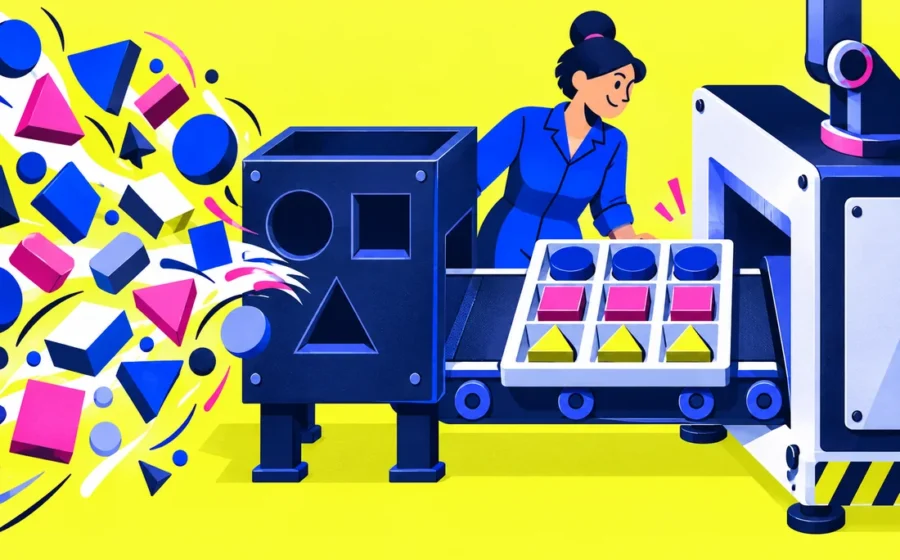
Structured outputs: making AI answers usable by software
Structured output gives software a predictable shape to work with. Correct structure and correct information are separate tests.
-

Model latency: measure the wait that users actually feel
Latency is the delay people experience while completing a task. Generation speed is only one component.
-
AI for design: use constraints to improve exploration
Design constraints make AI exploration easier to judge. They connect visual choices to a real task.
-

Model hallucinations: why plausible answers can be wrong
A plausible answer can be unsupported. Hallucination is a reliability problem to design around, not a flaw solved by asking for confidence.
-

AI cost: count the whole workflow, not one response
A useful AI budget counts completed work, including retries, tools and review.
-
AI for customer support: make escalation part of the product
A support assistant needs a practical route to a person when evidence or authority runs out.
-

Evaluations: build a test set before choosing a model
An evaluation set turns ‘this model seems good’ into a question you can investigate with repeatable examples.
-

Caching: reuse work when the underlying inputs stay valid
Caching reuses valid work. Its most important rule is knowing when that work has become stale.
-
AI for sales: improve preparation without inventing personalization
AI can organise accurate sales preparation. It should not invent familiarity or a prospect’s needs.
-

Grounding: connecting an answer to its evidence
Grounding connects a response to evidence that can be inspected. It is a relationship between a claim and a source.
INDEPENDENT MINDS. INTELLIGENT COVERAGE.
AI, ONLY. ALL ANGLES.
Learn
Big ideas, clearly explained. Build your understanding of AI one useful question at a time.